Your cousin with type 2 diabetes ordered a sensor online, no prescription and no insurance claim, and now texts you photos of her breakfast graph. You have wondered for a while what your own numbers do after lunch.
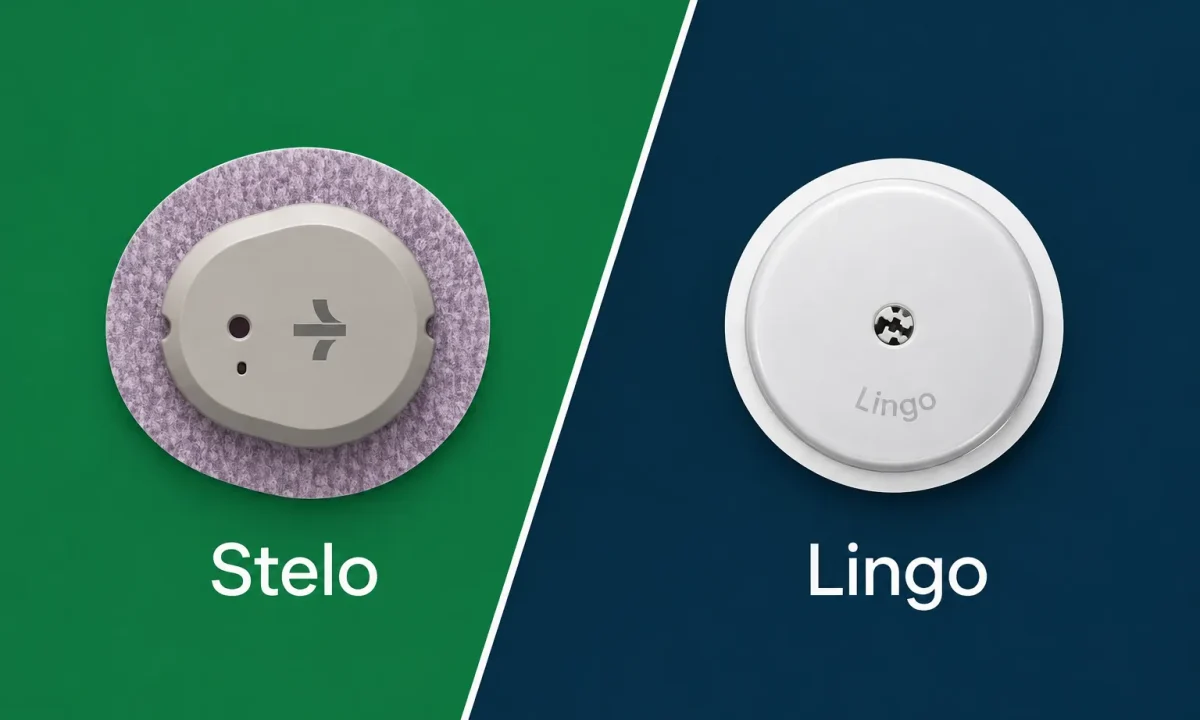
The best over the counter CGM for most people is Dexcom Stelo if you want plain glucose numbers and a diabetes-style graph, or Abbott Lingo if you want meal-by-meal coaching. Both are cleared for adults 18 and older who do not use insulin. Both use real sensor hardware. Neither one has an urgent low alarm.
The short version before the detail:
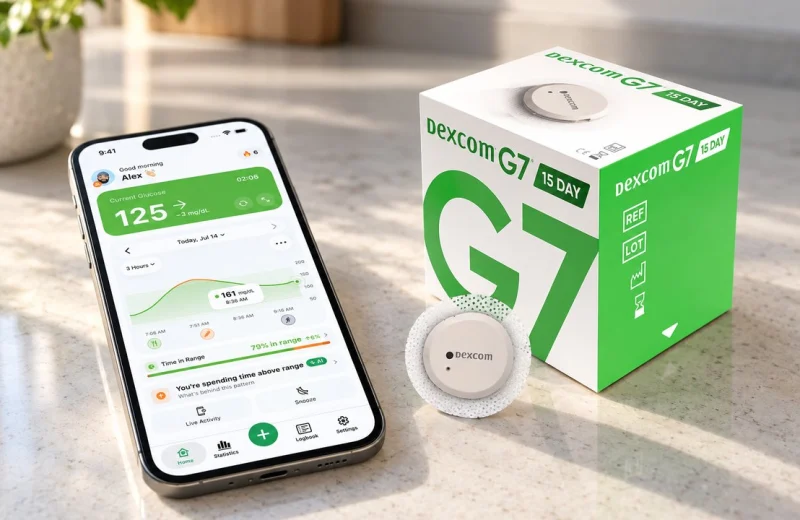
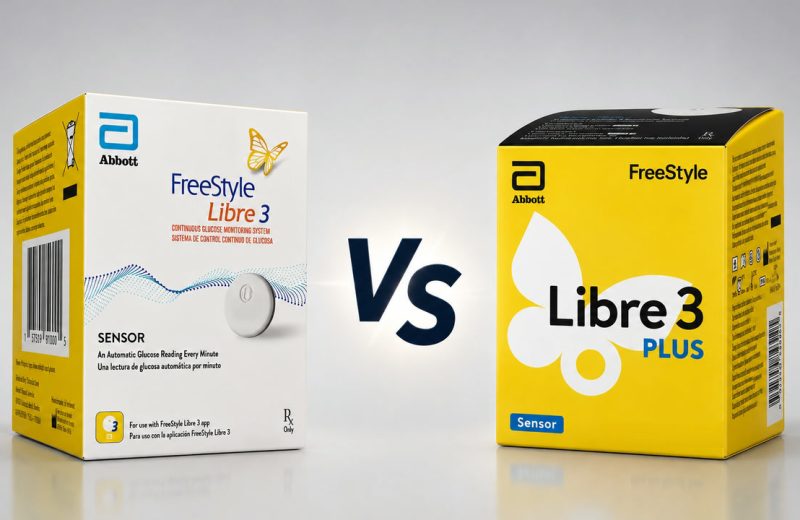
- Stelo and Lingo are built on the same sensor platforms as Dexcom G7 and FreeStyle Libre 3, so the readings are real.
- Stelo shows a glucose number in mg/dL; Lingo leans on a spike score instead.
- A single Lingo sensor is the cheapest legal way to see two weeks of your own glucose data in the US.
- Neither product is intended for anyone who takes insulin or who has a history of severe lows.
- Neither one feeds the follower channels that family apps read, so nobody can watch your numbers from another phone.
On this page
Do over the counter continuous glucose monitors actually work?
They work. Stelo runs on the same sensor technology as the Dexcom G7, Lingo runs on the Libre 3 platform, and the FDA cleared Stelo in March 2024 as the first over the counter continuous glucose monitor sold in the United States. Accuracy data went through the same agency review the prescription systems face.
What changes is not the wire under your skin. It is the software wrapped around it, and the population the product is labeled for. An OTC CGM is a continuous glucose monitor sold for wellness use: lifestyle insight and metabolic health rather than treatment decisions. It helps you see how your body responds when your diet changes, what a 20 minute walk after dinner does to the curve, and why 3 p.m. feels like a wall. For that job it is genuinely good. The sensor measures glucose in the fluid under your skin around the clock, which turns a changing number into patterns you can act on with food, sleep and movement. Medication decisions stay with your clinician.
If continuous data is new to you, learn the mechanics first. Interstitial fluid, warm-up periods and lag work the same way across all of these products: how a continuous glucose monitor actually works.
How Stelo and Lingo differ from Libre 3 Plus and G7
The core difference is alarms and update speed, not sensor quality. Prescription CGMs push an urgent low alert at 55 mg/dL (3.1 mmol/L) that overrides your phone’s silent settings. The OTC glucose biosensor options are not built to do that, and the Stelo Glucose Biosensor System reports a new value every 15 minutes rather than every 5.
| System | Prescription? | Official wear period | Low alerts | Labeled for |
|---|---|---|---|---|
| Dexcom Stelo | No | 15 days | No urgent low alarm | Adults 18+ not using insulin |
| Abbott Lingo | No | 14 days | No glucose alarms | Adults 18+ not using insulin |
| FreeStyle Libre Rio | No | 14 days | No urgent low alarm | Adults 18+ with type 2 not using insulin |
| FreeStyle Libre 3 Plus | Yes | 15 days | High, low and signal-loss alarms | Adults and children 4+ |
| Dexcom G7 | Yes | 10 days (15 day version rolling out in the US) | High, low, urgent low and urgent low soon | Adults and children 2+ |
Two smaller gaps matter in daily life. Prescription sensors connect to automated insulin delivery systems and pumps; OTC biosensors do not, because they are aimed at people who do not use insulin. Prescription sensors are also labeled so you can use the reading in a treatment decision after confirming per your care team’s instructions, while Dexcom’s own Stelo materials are explicit that it is not for making those decisions.
What the over the counter versions leave out
The missing pieces are the safety net, not the science: no urgent low alarm, no escalating night alerts, and no follower feed that a second person or a third-party app can read. Lingo carries no glucose alarms at all.
People ask us about that last one constantly. Libre 3 Plus data reaches other apps through LibreLinkUp, and G7 data reaches them through Dexcom Share. Stelo and Lingo are closed. Your health data stays inside their own apps, with no stream to a follower tool on another device. So Sugar Sense can pull from Libre, Dexcom and Nightscout, but it cannot read a Stelo or a Lingo, and no other companion app can either. If remote family visibility is the reason you want a sensor, an OTC biosensor is the wrong purchase.
The recurring themes in our support inbox are not metabolic scores. They are nighttime lows, alarms people slept through, and parents who want a second screen. Stelo and Lingo were never designed to solve any of that.
The cheapest way to try a CGM without insurance
The lowest entry point in the US right now is Abbott Lingo at about $49 for one sensor, or about $89 for two, while Stelo runs about $99 for a two-sensor pack. Stelo is also sold as a slightly cheaper monthly subscription, and both products are FSA/HSA eligible. No prescription, no clinic visit, no claim.
Sensor life is close between the two: Lingo wears for 14 days, each Stelo sensor for up to 15 days before replacement.
Two other routes are worth a phone call before you buy:
- Cash price on a prescription sensor. Ask your pharmacist what a Libre 3 Plus or G7 sensor costs paid out of pocket, and check the manufacturer savings programs. Sometimes the gap between OTC and prescription is smaller than the marketing suggests, and you get alarms.
- A trial sensor from your clinic. Many endocrinology and primary care practices keep sample sensors for professional CGM wear. It costs you a visit rather than a subscription.
Have type 2 and weighing a first sensor? This walkthrough covers what to actually do with two weeks of data: CGM for type 2 diabetes.
Who should not rely on an OTC biosensor
Skip these products if you take insulin, if you have type 1, if you have ever had a severe low or blunted low symptoms, if you are pregnant, or if you are buying for someone under 18. In every one of those situations the alarm is the product. And the alarm is exactly what has been removed.
Dexcom’s own labeling also rules Stelo out for anyone with problematic hypoglycemia, for the same reason: the app has no urgent low alarm.
The NIDDK notes that hypoglycemia symptoms can weaken over time, which is precisely when a device that shouts at you earns its keep. I have lived with type 1 since 2014, and nighttime lows are my own long-running problem. There were nights when one alarm did not wake me. That is why I care so much about layered alerting, and why a sensor with no low alert would be useless to me no matter how good its graphs looked. If overnight lows are your worry too, start here: nighttime hypoglycemia warning signs.
Reading your first two weeks: one day at 70 to 180 mg/dL
The 2019 International Consensus on Time in Range set 70 to 180 mg/dL (3.9 to 10.0 mmol/L) as the standard range, with 70 percent of the day inside it as a common goal for many adults. That is the yardstick clinicians actually use. OTC apps often show you a score instead, so it helps to translate. Stelo users without diabetes may see a tighter 70 to 140 mg/dL target with a 96 percent time-in-range goal, while people with type 2 are typically pointed toward the 70 percent goal above.
Here is one ordinary day of glucose spikes from an OTC sensor, converted by hand:
- Wake at 6:30 around 98 mg/dL, flat until breakfast.
- Cereal at 7:00, peak 196 mg/dL at 7:50, back under 180 by 8:30. That is about 40 minutes above range.
- Lunch peak 168 mg/dL. In range the whole time.
- Pasta dinner at 19:00, peak 214 mg/dL, still 185 at 21:00, under 180 by 21:40. Roughly 100 minutes above range.
- Overnight steady in the 90s.
Total above range: about 2 hours 20 minutes, so roughly 90 percent of that day sat between 70 and 180. The useful finding is not the percentage. It is that dinner, not breakfast, owns most of the excursion, and you can test that next week with a shorter walk-free control day or a different portion. Two weeks of that, then a conversation with your clinician, is a real return on $49. The point is lifestyle adjustments drawn from the pattern. An OTC sensor does not replace a blood glucose meter when a medical check is needed. For the full picture of how the metric works, see Time in Range explained.
This article is general education from someone who wears a sensor daily, not medical advice. An over the counter biosensor is not a substitute for a prescription CGM and its alarms, and a companion app like ours never replaces the alerts built into your own device. Any change to medication or how you treat a low belongs with your healthcare team; our full disclaimer spells out the limits.