I have lived with type 1 diabetes for 12 years. I was diagnosed in the summer of 2014, at nineteen, and I still manage it with multiple daily insulin injections and continuous glucose monitoring, which has given me a lot of hands-on experience with both diabetes care and the technology around it. I knew absolutely nothing about diabetes back then. I was away from home when the thirst started, the kind you cannot switch off, along with bathroom trips around the clock, so I called my mother and listed the symptoms. She works in a medical laboratory and she did not hesitate: come back, we are checking your blood sugar. I went straight from that trip to her lab. The meter read 470 mg/dL. I genuinely did not know whether that number was good or bad. Then my mother started crying, and that is how I found out. I learned my diagnosis from her face before any doctor said a word.
I was admitted to hospital and started insulin. Pens from day one, Apidra and Lantus, and funnily enough that is still my exact setup twelve years later: no pump so far, multiple daily injections have worked for me.
Twelve years in, I still think in mg/dL the way other people think in hours. A 64 on the screen is not a number to me, it is a specific feeling in my legs on the way to the kitchen.
On this page, I share that lived experience for people with type 1 diabetes, their families, and anyone interested in managing diabetes with tools like CGMs and companion apps. You will find my story, the challenges of day-to-day diabetes management, why I built Sugar Sense, the daily friction points I wanted it to solve, and the features I care about most: safer alerts, quieter monitoring, better use of CGM data, and better ways to share what is happening with the people around you. The goal is practical: type 1 diabetes is demanding, and the right information, alert systems, technology, and community support can make it calmer, safer, easier to manage, and less lonely.
On this page
The country where nobody had heard of CGM
I am from Georgia. The country, not the US state. The first year or two of my diabetes were fingersticks beyond counting: a chronic condition demanding daily blood sugar monitoring and constant attention, because living with type 1 diabetes means the body stops making enough insulin as the immune system attacks the insulin-producing cells in the pancreas, so managing diabetes becomes a nonstop effort to manage blood sugar levels. It hit at exactly the age when I thought my life was about to begin, and for a while I decided it was over. There was a real dark period in there, and I will not romanticize it. Anger, sadness, and even stress-driven burnout are normal for people living with this health condition, and the mental health strain is real, with higher depression risk.
What pulled me out was treating the condition the way I treat any hard technical problem. I have been building things on the internet since I was fourteen, so when I read that a sensor called the FreeStyle Libre had just come out, I did what I knew how to do: I used research to learn managing diabetes over time, and every day was a new chance to learn, then ordered it myself, from Germany. No doctor here recommended it. Most doctors in my country did not know it existed, and many still do not. For all I know I was one of the first people in Georgia walking around with a CGM on my arm, possibly the first, and honestly it would not surprise me.
I have worn one ever since: every Libre generation, a Libre 3 Plus on most days, with a Dexcom G7 in rotation from time to time, so I know both ecosystems from my own skin rather than from spec sheets. For adults in Georgia there is still no insurance or state program that covers sensors, so I have paid for every sensor out of my own pocket for twelve years, and I would do it again without thinking. To be fair, things are slowly improving: children under 18 now get sensors covered by the state, which would have sounded like science fiction in 2014. Support from the diabetes community and other people living with type 1 diabetes can be invaluable for long-term health, especially when local expertise is limited.
The sensors themselves are small miracles. My frustration was never with the hardware.
It was with everything that happens after the sensor.
The night that started it
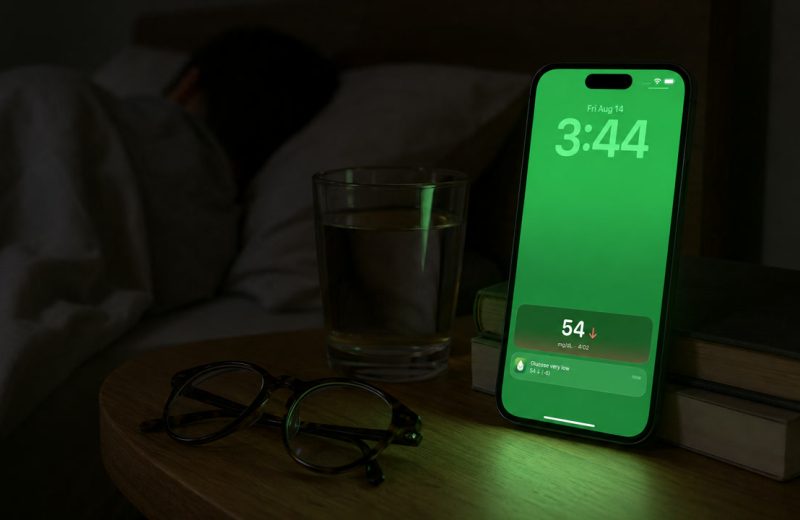
The specific fear that lives with type 1 is sleeping through a low blood sugar episode. One night, years into wearing sensors, I did not wake to an alarm, and low blood sugar can bring on shaking or confusion before you fully register what is happening. Nothing terrible happened; I surfaced later on my own, treated the low and went back to sleep, but severe hypoglycemia can become life-threatening if someone has a seizure or loses consciousness during sleep. Keeping fast-acting glucose nearby matters, and emergency supplies should also include glucagon. But I remember sitting on the edge of the bed afterwards, wide awake, thinking about what I actually wanted. Not a louder beep. A second, independent layer of alerts, and ideally a warning before the low instead of during it.
I build software and marketing for a living, and for years those two lives ran side by side: product work by day, and a person with type 1 glancing at his phone between meetings. By then I was also a father of three, and being the only person in the house who could see my numbers at night had stopped feeling acceptable, especially because parents responsible for children in the home need that overnight visibility too. In the past, that fear had felt abstract; now it felt immediate. Without enough insulin, high blood sugar can cause fatigue and progress to diabetic ketoacidosis, a life-threatening emergency, and 21% of deaths in younger people with type 1 diabetes are due to diabetic coma. That night the two lives collided. I stopped waiting for someone else to build the app I wanted and started building it myself to lower the risk of complications.
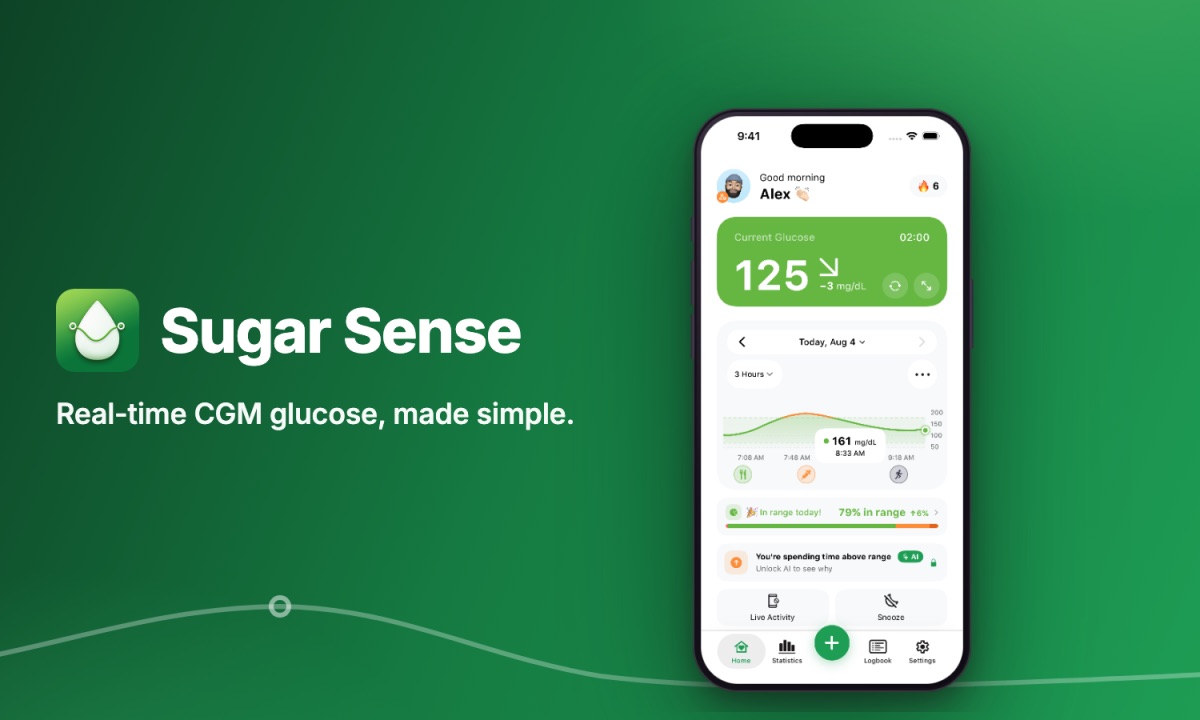
That app became Sugar Sense.
The decisions I will not reverse
It is dose-free, permanently. Sugar Sense never suggests insulin doses, and its AI features are filtered in code so they cannot either. Twelve years in, I know exactly where that line sits: insulin therapy and any treatment plan should be guided with a diabetes care team, and an app’s job is to make sure I can always see what is happening. Any app that casually proposes doses is a hazard pretending to be a helper.
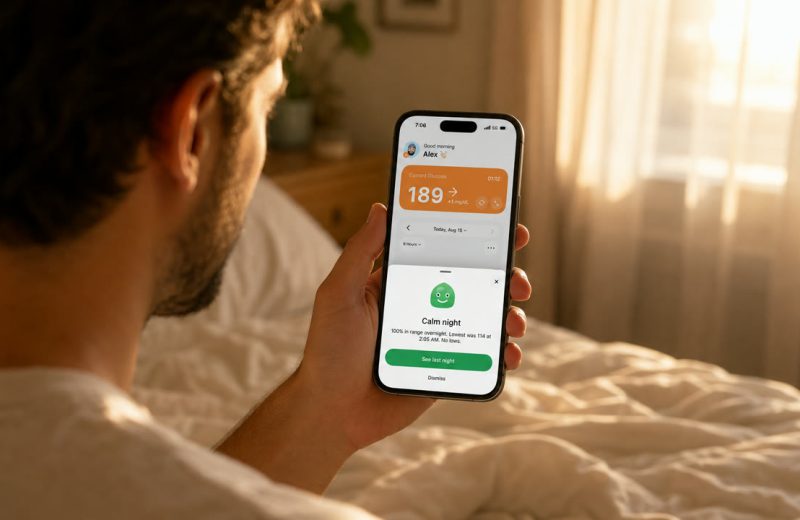
Alerts are built against alarm fatigue. When everything beeps, you eventually stop hearing the beep that matters. That is not a personality flaw, it is documented human behavior. So the defaults are asymmetric: urgent lows are loud and can break through Silent mode, highs are patient, and a predictive alert warns roughly twenty minutes before a low is likely. Continuous glucose monitors support continuous glucose and help track blood sugar around the clock, but frequent alarms can also disrupt sleep. That forecast is the alert I wanted on the edge of that bed, and it is still the one feature I would keep if I had to delete all the others.
The safety net is free, forever. Real-time monitoring, alerts and family following cost nothing in Sugar Sense, and they never will. Charging someone for a hypoglycemia alarm never sat right with me. Premium exists, and it pays for our servers and our work, but it covers convenience and intelligence: the Apple Watch app, AI insights, reports, integrations. In modern diabetes care, managing type 1 usually means pairing blood sugar tracking with tools that deliver insulin, including insulin pumps, even if my own medicine still relies on multiple daily injections. The safety loop itself is not for sale.
Family should not have to guess. Care Circle lets the people who love you follow your glucose in real time on their own phones, with their own alert settings, and for severe lows the app can place an automated phone call. Anyone who has lived alone with type 1, or loved someone who does, knows exactly what 3 a.m. means. In my own family this is not abstract: five years after my diagnosis, my father developed type 2, so glucose has been a topic at our table for a long time now. Regular checkups with your healthcare team remain key, even with strong medical care and good technology in place.
What twelve years on sensors with type 1 diabetes actually teaches you
Mostly small, unglamorous things. A sensor can catch on a door frame and be gone in half a second. One of mine was pulled clean off by one of my kids, who found it exactly as interesting as I feared. I used adhesive overpatches for years and then stopped, because I no longer needed them. None of this appears in a brochure, and all of it shapes what a good companion app should care about: showing you the data you have, telling you clearly when it stops, and never drowning you in noise on a day that is already hard.
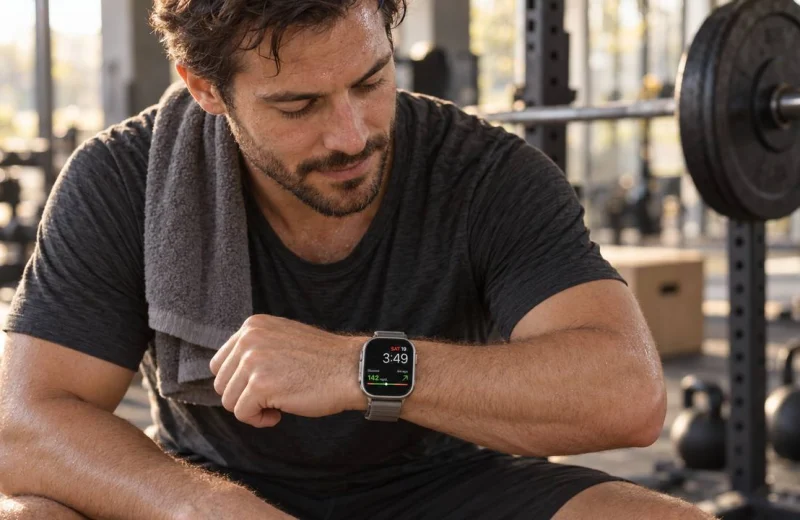
The gym taught me things too. When I go low during a workout, fast glucose tablets bring me up quickly, but for me the lift is short and I drift back down unless I eat something after; a banana settles me more steadily. That is my body, not advice, and even the timing and type of food can change how long that recovery lasts after exercise; fast-acting glucose remains the standard first response to a low. I mention it because patterns like that are exactly what you start noticing once your own numbers are easy to look at: blood sugar can shift with physical activity, stress, hormones, and other factors, and differences in metabolism are part of why each response is individual, even if regular exercise can improve insulin sensitivity. Seeing that clearly helps me feel more normal, with better energy, and making it easy to look at is the whole product.
These days my glucose sits on the Modular face of my Apple Watch Ultra 2, with the Sugar Sense mascot in the middle of the dial, on my iPhone Lock Screen, in the Dynamic Island and in the corner of my Mac’s menu bar. My time in range stays between 85 and 90 percent, even though most people aim for 70%, and while some use insulin pumps to help keep levels in range, I have done it with multiple daily injections. I honestly credit the app for holding it there, because I see the number everywhere, all the time, without doing anything. With the right tools and routines, you can lead a full, active, healthy life.
Where diabetes care stands today
What started as one stubborn iPhone project is now built by a small team at Sugar Sense, and it is growing fast. Every day brings positive messages from real people in different corners of the world, and honestly, that is what keeps us motivated; better tools and treatment are also helping people with type 1 diabetes become living longer than in the past. That progress is also reflected in long term survivors recognized through the Joslin Diabetes Center medal program. Sugar Sense follows FreeStyle Libre, Dexcom and Nightscout in real time on iPhone, Apple Watch, Android, Wear OS and the web, and continuous glucose monitors provide around-the-clock blood sugar readings. It lives in the browser toolbar, in the Windows system tray, and it answers on Alexa when your hands are full. The goal was never a long feature list. The goal is that your glucose is wherever your eyes already are, because managing diabetes depends on insulin delivery and blood sugar levels tracking throughout the day.
Why I write here
Alongside the product, we keep a blog of plain-English, dose-free guides on CGMs, trend arrows, time in range and remote monitoring, checked against published clinical guidance, where tight blood sugar control often aims for HbA1c under 7%; even with better guidance and technology, there is still no cure for type 1 diabetes. Long-term high blood sugar brings an increased risk of heart disease and other complications, including kidney disease and nerve damage, and women with type 1 diabetes may face higher risk than men. There are also free tools that need no app at all: a blood sugar converter, an A1C calculator, a time in range calculator and a CGM glossary.
Twelve years in, I know no app makes this disease easy, and managing it is a long-term commitment that touches medication, blood pressure, healthy eating, and many parts of life and health, including mood and irritability when blood sugar runs high. On the hard days nothing does. But the right tools make it calmer, quieter and easier to share with the people around you. That is the app I always wanted, and that is the one we are building.
And if I could sit next to the nineteen year old in that laboratory, watching his mother cry and understanding nothing, I would tell him this: it is not a verdict. It is a companion, an annoying one, but you can live a full life next to it. Work, the gym, family, all of it. His time in range today would sound like science fiction to him. So would the fact that he built the thing that helps hold it there.
You can get every platform from the download page, and I read every message that arrives at support@sugarsense.io.
This is a personal story, not medical advice. Treatment decisions belong with you and your care team; please read our medical disclaimer.