Traveling with diabetes goes best when you pack about double the supplies you expect to use, keep every one of them in your carry-on, keep fast-acting carbohydrate on your person, read trends instead of single readings, and settle any timing questions with your care team before you leave home. For people with type 1 or type 2 diabetes who use a CGM, and for caregivers following someone’s glucose remotely, those basics matter because travel changes meal timing, activity, sleep, stress and temperature in ways that can push glucose out of range.
Here is the part that surprises people: the flight itself rarely moves your glucose much. The small changes around it do. Ten miles of walking in a new city, dinner at 10 p.m., five hours of sleep, a pastry nobody can estimate.
This guide covers the practical parts: how to pack diabetes supplies, what happens at airport security with a Dexcom G7 or a FreeStyle Libre 3 Plus, time zone shifts, heat and cold, lows away from home, and how to use CGM trend arrows and alerts to make sense of changing glucose on a trip.
Five things worth locking in before you go:
- Double supplies, carry-on only, plus one spare sensor for every week away.
- Fast-acting carbohydrate on your body, not in a bag in the overhead bin.
- Original pharmacy labels or a prescription copy for everything you bring.
- Low alerts on and actually audible, and one person at home who can see your data.
- Time zone timing reviewed with your prescriber, in writing if you can.
On this page
What travel actually changes about your glucose
Travel changes four inputs at once: meal timing, activity, sleep and stress. That is why your numbers can wander on a trip even though your treatment plan has not changed at all.
A sightseeing day can be the most exercise you have had in a month. A twelve-hour transit day can be the least. Neither is a problem you did something wrong to cause. They are just different days, and they show up in your graph.
- Time zone shifts that move meals, medication and sleep off their usual clock.
- Activity swings between walking tours and long sedentary stretches in a seat.
- Unfamiliar food with portion sizes and carbohydrate content you cannot judge yet.
- Short sleep and travel stress, which can push readings either direction.
- Heat and cold, which affect you and your supplies separately.
Packing diabetes supplies: what belongs in the carry-on
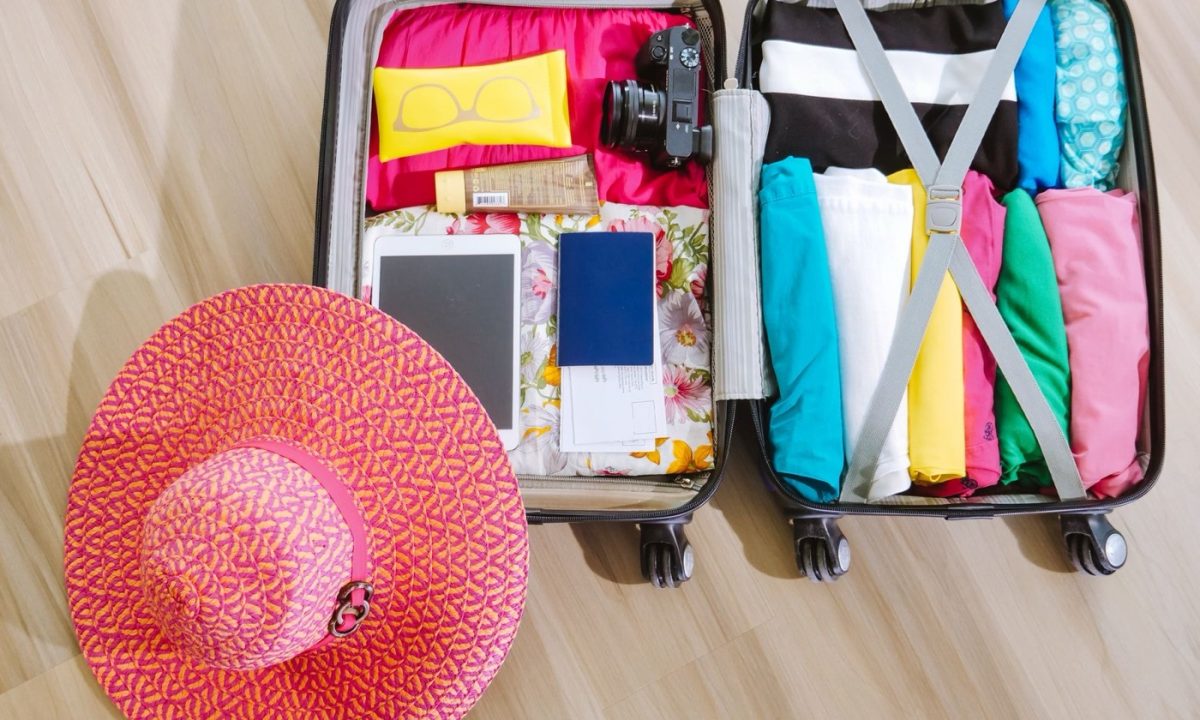
Anything that keeps you safe goes in your carry-on: insulin or other medication, sensors and applicators, a backup meter with strips, and fast-acting carbohydrate. Checked bags go missing. A cargo hold can also get cold enough to freeze insulin, which ruins it.
Temperature is worth understanding before you pack a cooler. FDA guidance on insulin storage says unopened insulin belongs in the refrigerator, and that insulin kept between 59 and 86 degrees F (15 to 30 C) can generally be used for up to 28 days. Frozen insulin should be thrown out. So never pack vials or pens directly against ice.
The rest of the list is short and boring, which is the point:
- All medication in original labeled packaging, plus extra.
- Sensors, applicators, and any transmitter or receiver your system uses.
- A backup meter, strips and lancets, in case a sensor fails mid-trip.
- Glucose tabs or gel in a pocket, and more in your bag.
- Charger plus a portable battery, because a dead phone is a dead CGM display.
- Insurance details, your care team’s contact information, and a note from your clinician describing your condition and supplies.
I wear a Libre 3 Plus most days and I stopped using adhesive overpatches a while ago, because I no longer need them. Sensors still come off early sometimes: I caught one on a door frame once, and one of my kids pulled one off. So a spare sensor rides in my bag even for a two-day trip.
Can a Dexcom G7 or Libre 3 Plus go through airport security?
You can fly wearing a CGM, and you do not need to take it off to get through screening. Tell the officer before you reach the machines that you wear a glucose sensor. Walk-through metal detectors are fine for both Dexcom and Abbott sensors. The full-body scanner is where the two manufacturers differ, so the answer depends on which sensor is on your arm.
Dexcom’s current guidance for the G7 says you can wear it through walk-through metal detectors and Advanced Imaging Technology (AIT) body scanners, and that the G7 is safe through luggage X-ray scanning. You can still ask for hand-wanding or a pat-down with a visual inspection instead. Abbott’s guidance for the FreeStyle Libre 3 and Libre 3 Plus is stricter: metal detectors are fine, but the sensor must not go through x-ray or millimeter-wave full-body scanners, because the effect has not been evaluated and could damage the sensor or skew readings. Notify the officer before the checkpoint and request another type of screening, or the sensor has to come off.
These rules change as manufacturers test newer devices (the G6 rules are stricter than the G7 rules), so read your own device’s current travel page before you fly rather than a forum post from three years ago. In the United States, TSA allows insulin, liquids for medical use and diabetes supplies through the checkpoint, and the American Diabetes Association keeps a plain-language page on air travel rights that helps if you are flying somewhere new.
Practical version: keep supplies in one clear bag near the top of your carry-on, mention the sensor before you step into the machine, ask for hand inspection of sensor boxes if your manufacturer has not cleared the baggage X-ray, and give yourself an extra fifteen minutes so none of this feels rushed.
Traveling with diabetes across time zones
Time zones are a medication-timing question, not a gadget question. If you are traveling internationally across time zones, plan them with your care team before you leave. A six-hour shift changes when every part of your routine lands, and only your prescriber knows your plan well enough to tell you how to adapt it.
What you can sort out on your own is the bookkeeping around it:
- Keep one clock on home time during the transition, so you always have a reference point.
- Check more often for the first day or two, when your patterns are least predictable.
- Know that CGM apps follow your phone’s time zone. When the phone jumps, your graph and log timestamps jump with it.
- Expect a rough day. Short sleep and a shifted eating window rarely produce your prettiest overnight line.
Heat, cold and long travel days
Heat is the underrated travel variable. It can spoil insulin left in a parked car, loosen sensor adhesive when you sweat, and speed up how quickly you drift low on a day when you are already walking twice your usual distance.
An insulated pouch handles most of it. Stay hydrated on the plane and on long travel days, since dehydration can push glucose up. Moving your legs when it is safe to helps, and so does checking your trend before a long stretch where you will not be able to. Cold cuts the other way: pens and vials should never freeze, and phones drain faster in the cold, which quietly shortens the life of the screen you are relying on.
Treating a low far from home
NIDDK’s guidance for treating a low is about 15 grams of fast-acting carbohydrate, then recheck after 15 minutes and repeat if you are still low, as described in its page on low blood glucose. The hard part while traveling is not the treatment. It is having it within arm’s reach at the exact wrong moment.
Keep glucose tabs or gel on your person, not only in a daypack you might leave in a hotel room. Tell whoever you are traveling with where the low kit is and how to help. Ask your care team before departure about glucagon and how to store and use what you have been prescribed. And if you are sleeping in unfamiliar rooms after unfamiliar days, read up on the warning signs of nighttime hypoglycemia before you go, not after a bad night.
Watch the arrow, not just the number
On a trip, the direction matters more than the digit: 110 mg/dL (6.1 mmol/L) holding flat after dinner and 110 falling fast at the top of a hill call for two different responses. That is the whole argument for looking at your CGM trend arrows before you decide anything, and for using arrows and alerts together rather than either one alone.
Reviewing your day at night also pays off. The 2019 International Consensus on Time in Range, published in Diabetes Care, set the common target range at 70 to 180 mg/dL with 70 percent of the day spent in it for many adults, which gives you a fair yardstick for a travel week without turning every meal into a test. If that metric is new to you, Time in Range explained covers it properly.
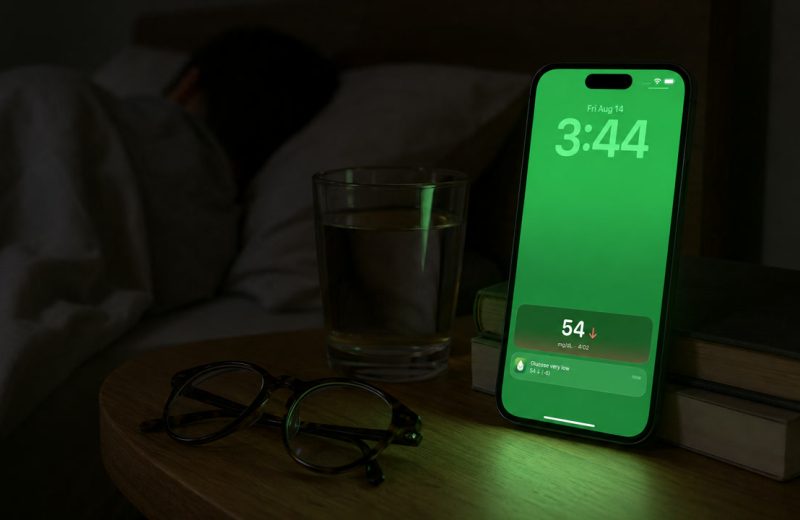
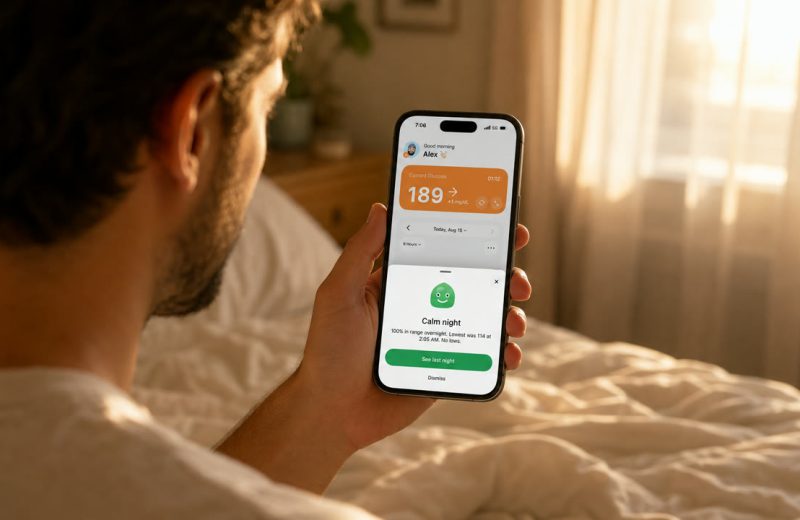
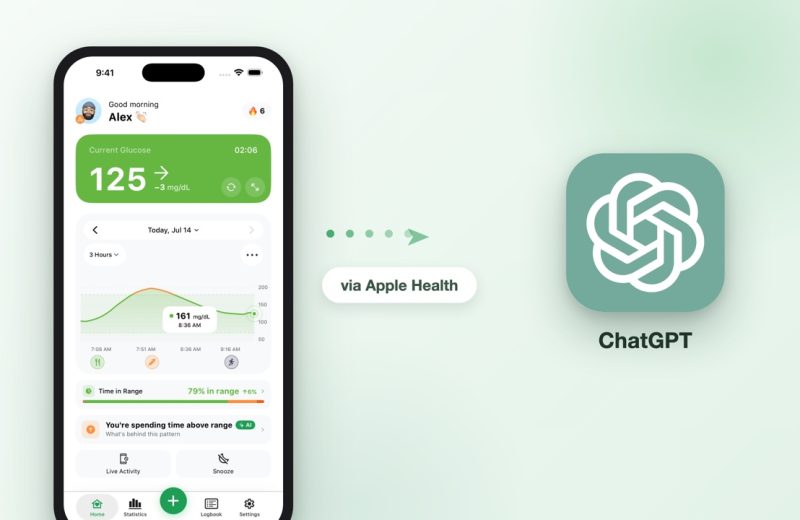
Alerts are the other half. I wanted a second, independent layer of warning on top of my sensor’s own app, especially at night, which is a big part of why my team and I built Sugar Sense: glucose on the watch face, alerts I can actually hear in a hotel room, and a way for someone at home to see that I am fine without texting me at 3 a.m.
Frequently asked questions
Do I need a doctor’s letter to fly with a CGM?
A letter is rarely required. It also costs nothing and it settles arguments. Something short, naming your condition, your supplies and any device you wear, plus original pharmacy labels, covers most checkpoints and most customs desks. Keep a photo of both on your phone as backup.
Can I put my sensors through the airport X-ray?
It depends on the device. Dexcom says the G7 is safe through luggage scanning. Abbott’s page for the Libre 3 and Libre 3 Plus covers the worn sensor (no x-ray or millimeter-wave body scanners) and does not clear the baggage X-ray for sealed sensor kits, so the safe default for Libre boxes is to keep them in your carry-on and ask for hand inspection. Either way, mention the sensor before you reach the scanner, and check the current travel page for the system you use, because the rules get updated.
How many supplies should I bring?
Roughly twice what the trip should need is the common rule of thumb, split so a lost bag cannot take everything. Count sensors by weeks away, not days, and add one spare. Delays, damage and early sensor failures all happen on the road.
Will my CGM app work abroad?
The sensor talks to your phone over Bluetooth, so local readings keep working with no signal. Cloud features are different. Sharing with family, and any app that reads from LibreLinkUp, Dexcom Share or Nightscout, needs internet, so plan roaming or a local SIM.
Written to be useful, not to be medical advice: I live with type 1 and wear a CGM daily, but I am not your clinician. A companion app, mine included, displays and alerts on top of your CGM and never replaces the sensor, its own app or its built-in alarms. Anything involving medication or timing across time zones belongs with your prescriber, and the terms of this disclaimer explain where our responsibility ends.